Background
On the last weekend I was at my (dead) great-uncle’s and (dead) great-aunt’s house in Arraiolos. On the hallway, placed atop of the chest, there it was - an Agfamatic 108 Sensor camera, waiting for an hacker to save it from certain disposal:
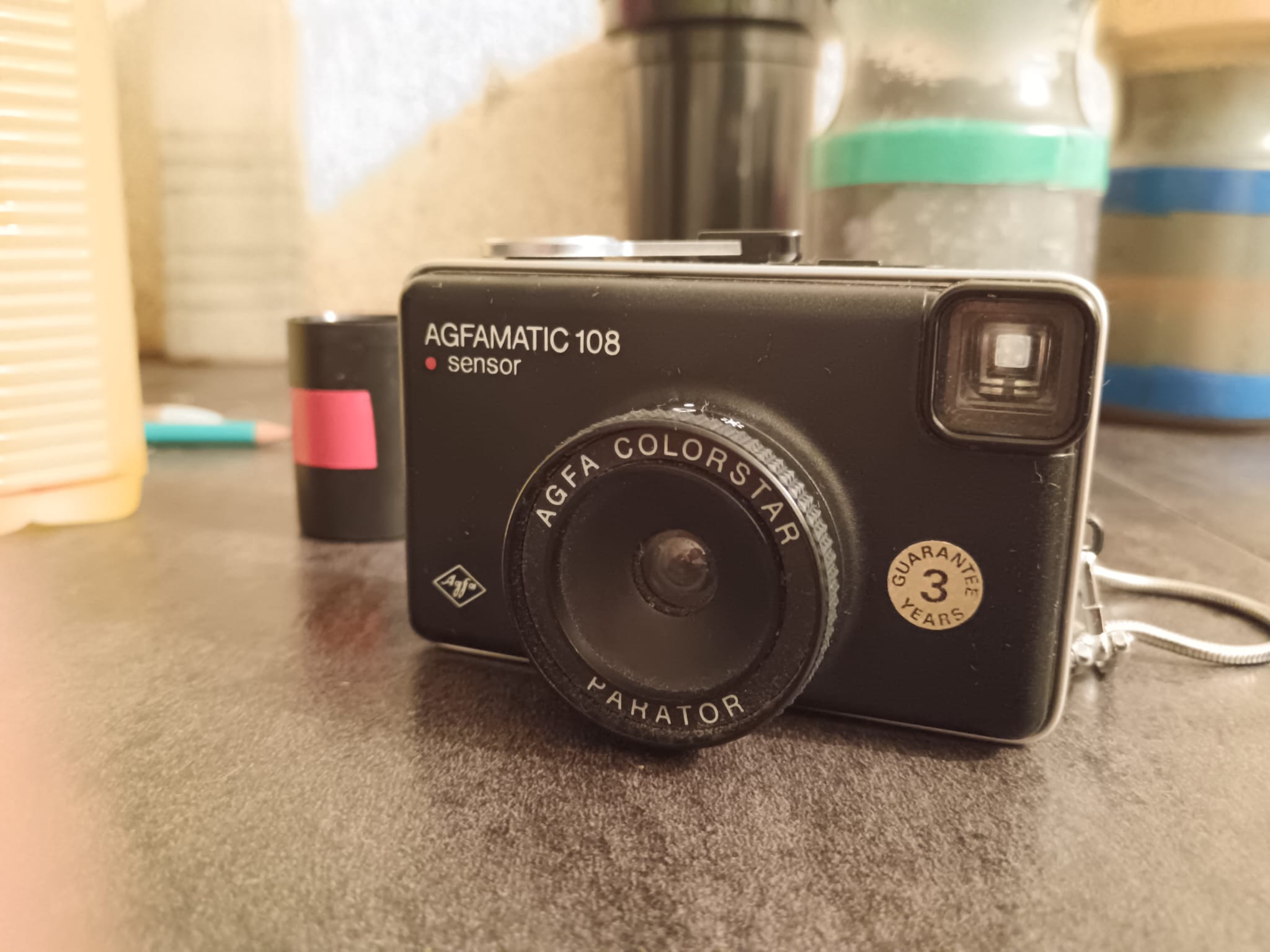
The wise man and wise woman that generated me, warned:
“That camera is sh***, its trash, don’t bother with it.”
But I empathized with the otherwordly object.
I reached to it, inspected it and opened it…..gasp……WHAT THE HELL IS THIS:
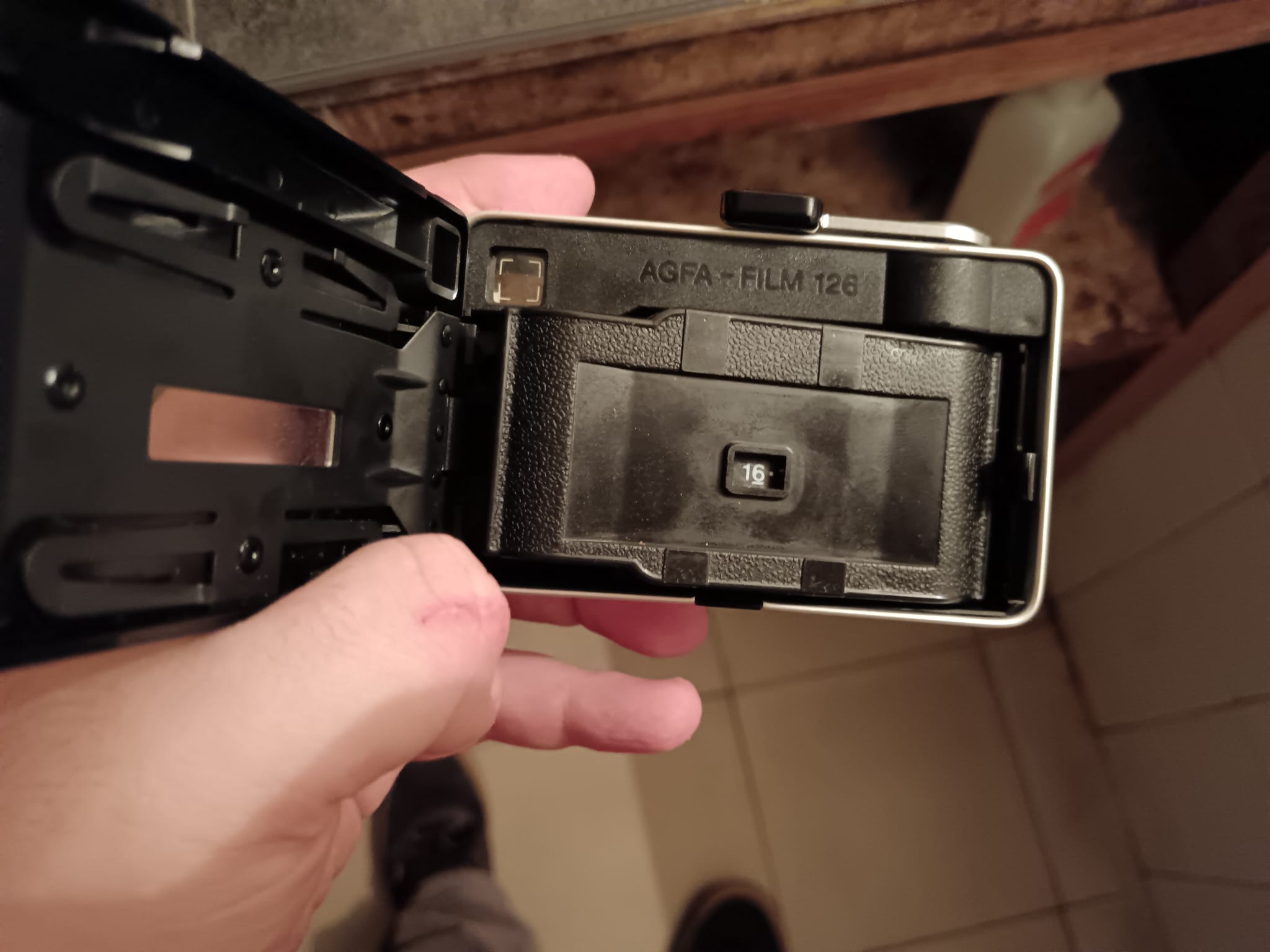
A DAMNED CASSETTE-LIKE CARTRIDGE?? WHAT UNHOLY FORMAT IS THIS?
A quick camera wiki search provided the magical answer - 126mm format - a dead, buried and mostly forgotten format, discontinued in late 2007.
This camera had peaked my interest, but now….now it had my attention :)
Does it work?
The cartridge had 13 photograms taken. I pulled the lever, pressed the trigger and a satisfying click emerged…It seemed to work!
I repeated this process….click click click….and I exhausted the cartridge - time to examine it:
Two pieces of platic make up the shell, with a window for the film to be exposed and a little window at the back to count the pictures taken.
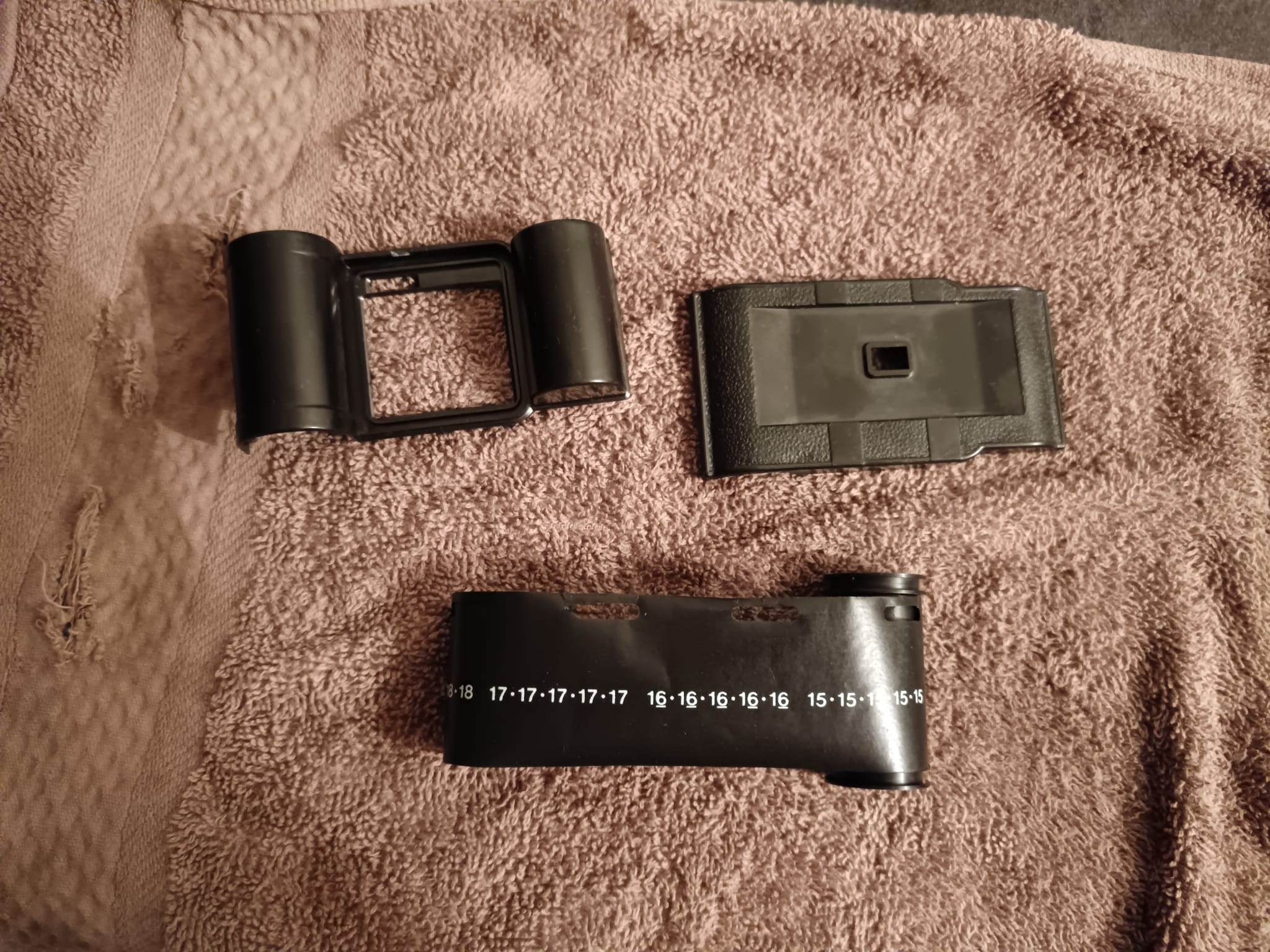
I manually pulled the film backward, through the little window (honestly the film that was there was probably expired plus).
Is there a solution?
Great question attentive reader!
The answer is yes - If you have a darkroom/darkbag available, some 35mm film, tape, finesse and some patience.
My good friends at NAF have a darkroom available. They have nice workshops and open-days, go show them some love - they deserve it.
As you may already know I lack on the last two requirements, therefore the colleagues at the room next door had to hear some pretty loud “FODA-SE ESTA MERDA, CARALHO” curses during the handspooling process.
Methodology, or How I Learned to Stop Worrying and Love the Lomography
Basically what you are going to do is:
- Carefully open the cartridge
- You may optionally do this in a dark room to save the original film, if it was photographed
- Gut out the film from the backing paper, being careful not to rip it
- Analyze the cartridge and familiarize yourself with its anatomy, take notice of cracks or possible light leaks
Now for the spooling process, João Rodrigues style:
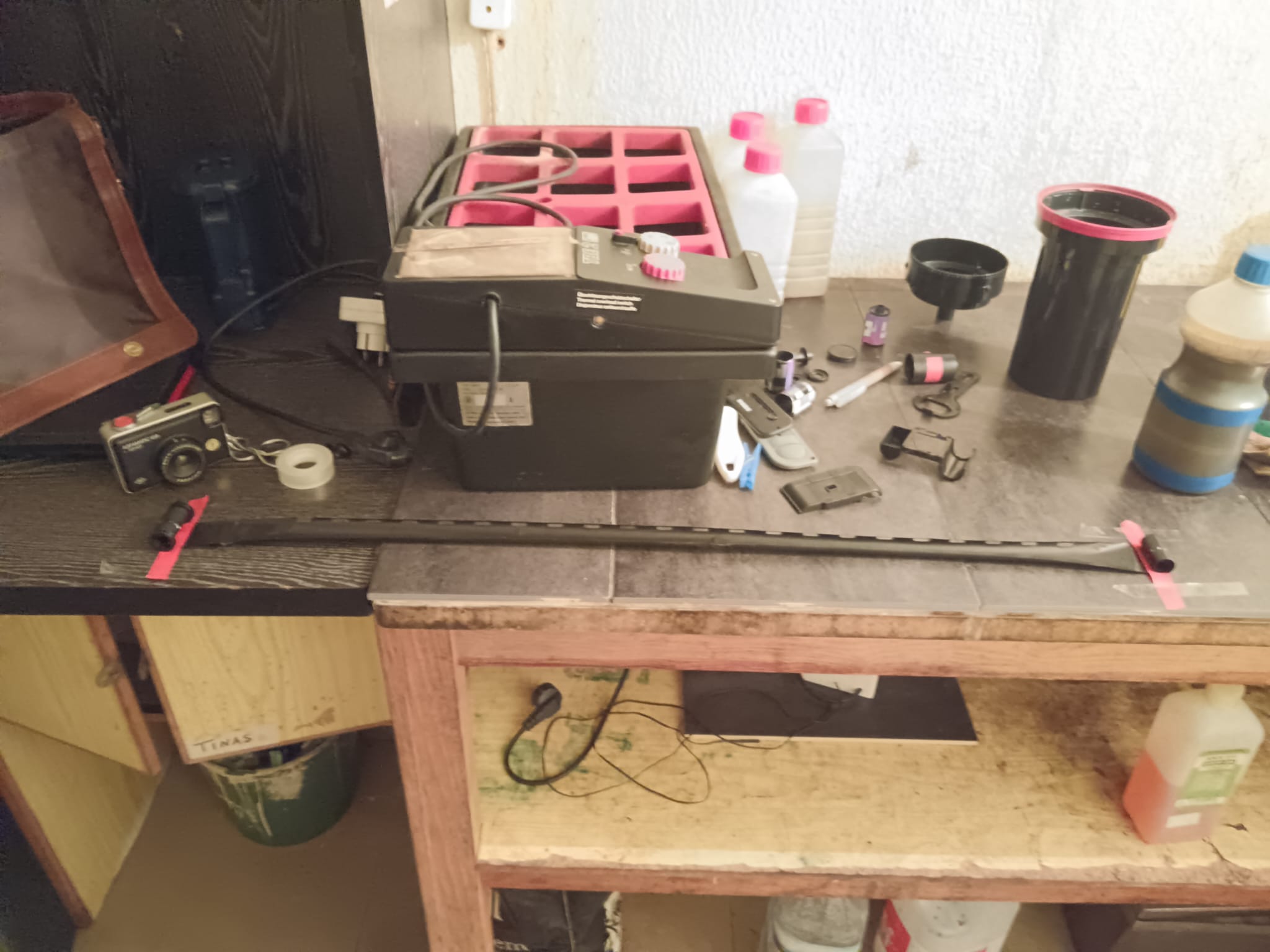
- Tape your film leader to the desired end of the backing paper (I did the first batch with ~12 photograms). remeber that the emulsion side should face you
- Here you can cut the leader, give some give, sui generis
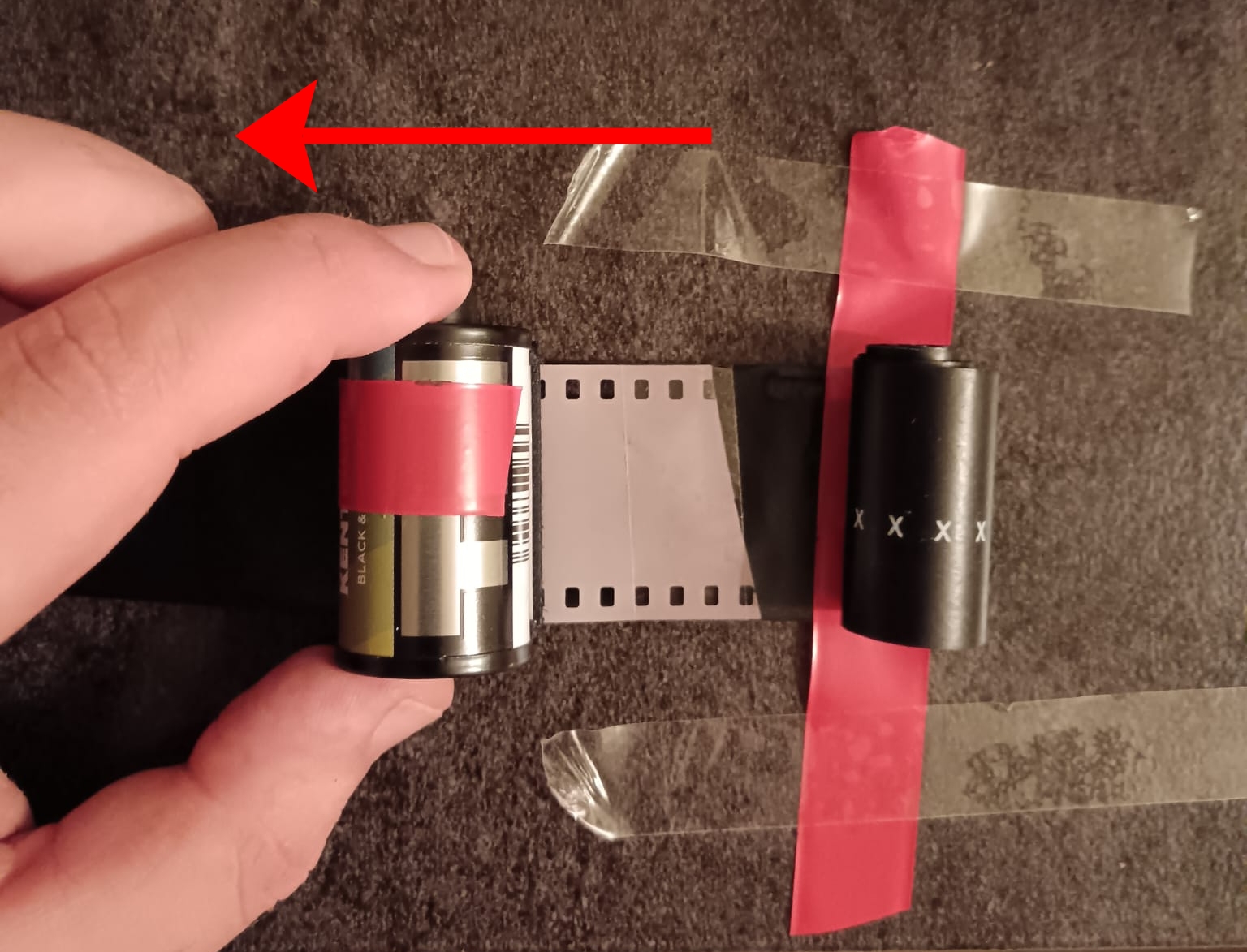
-
Now turn off the lights in the darkroom! You will now unspool and tape the 35mm film to the “begining” of the backing paper, where the old 126 film was glued
- Once again sui generis
- Also you can optionally f*** up this process several times:
- Untapping the end and having to respool the 35mm back into the canister, turning on the lights and redo the whole process
- Putting too much tape
- Putting your dirty paws on the emulsion…leaving fingerprints for some extra chef kiss lomography
- Etc. Bonus points for finding your own way to completly botch your job
-
Now, carefully roll the backing paper and film item in a tight, neat cilinde
- Be sure it is nice and tight, if you cannot fit it in the compartment, you’ll have to redo it
-
Fit the backing paper and film item in its compartment and the spooling cilinder in the other compartment
-
Close the cartridge
-
Turn on the lights and give your camera some cranks until it clicks in place.
-
Maybe shoot once and crank to see the feel of it :)
And you just hacked your first 126 cartridge!
Results
I made the first test with a little less than 12 frames, 200 ISO indoors:
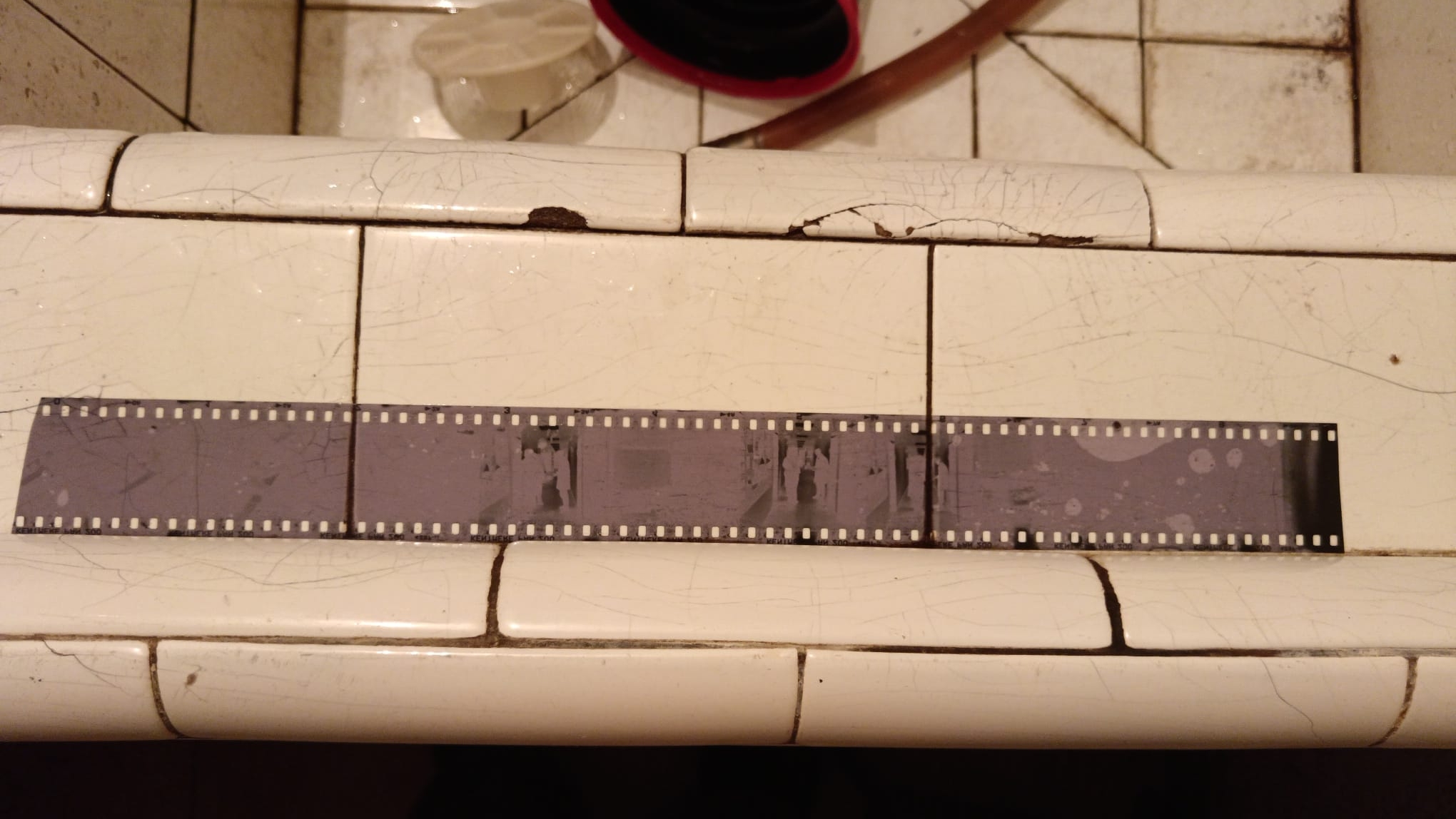
As expected the film as little information - but that is a good thing! No burned film, no major light leaks, no overlapping frames, and the image extends to the sprocket holes, which looks pretty cool!
I also tried to load a full cartridge with 24 frames, but I struggle to fit the film roll, the camera struggled to crank it, and the cartridge kept on popping open - It was a botched job which ended with me chucking the film in the trash. I would keep it to 12-15 frames, but I will try again in the future.
I might update this section with some more results in the future…
Was it worth it?
It does depend on various factors and how you rank them in order of enjoyment, so I made this helpful table to agilize your decision process:
| Feature | Qualitative Grade |
|---|---|
| Hassle-free? | ❌❌ |
| Quality | ❌ |
| Novelty | ✓✓ |
| Bragging rights | ✓✓ |
| Fun? | ¯\_( ͡° ͜ʖ ͡°)_/¯ |
Additionally this is a destructive process, as the tape will start to wear off on the backing paper, so keep that in mind.
Future work
As I was finishing this post for deployment I verified that I might have broken the camera - It seems like the lever isn’t pulling properly no more. Years of no-use with the additional experimental method can do this to a banged up, fixed lens, plastic camera….
I will try to fix it, but this model is also quite cheap on the second-hand market, normally below 15€ - and so, if that time comes, I will just buy a new one, as I’ve become addicted to this film format, the method, and the ‘LOmOGRaphY’
Using orthographic film is also on the to-do list, as it would simplify (a lot) the hand spooling process (and I also think it looks good)!
I will now stop here, as the source-code for this post has 126 lines, which seemed fitting :)
Signing off!